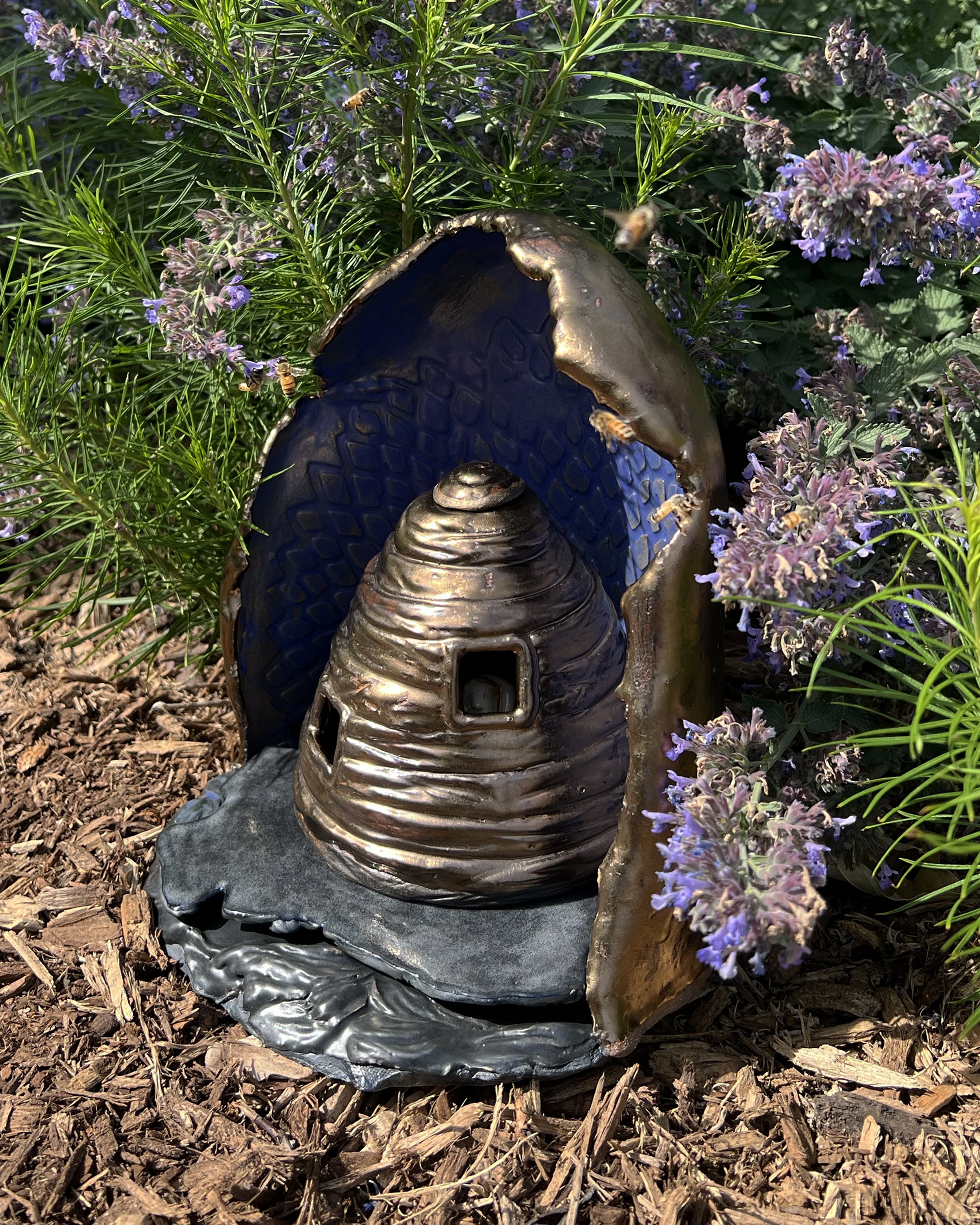


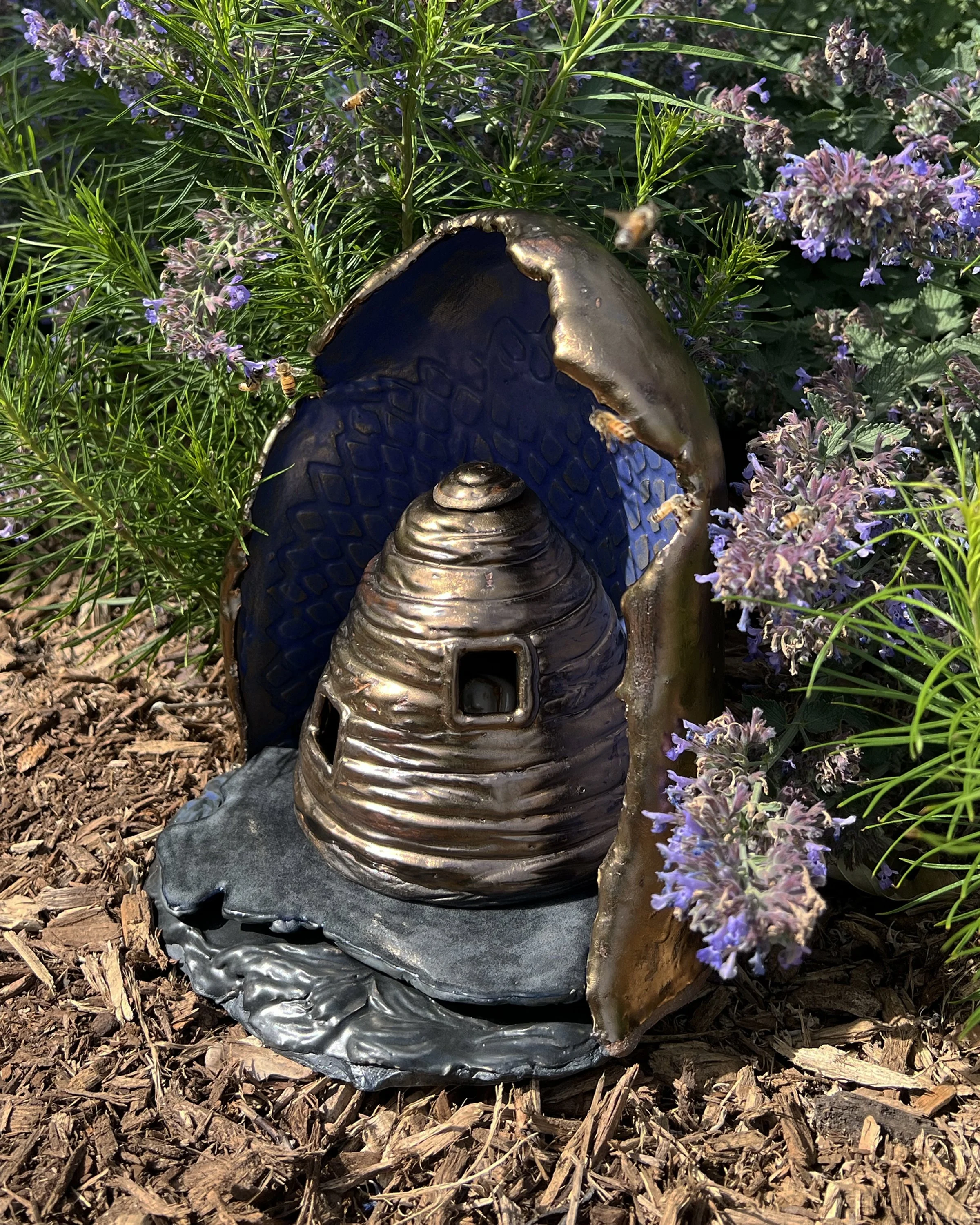
Sherry Erskine, Hive Grotto [1st edition], 2026, in situ East River Park, stoneware, terra sigillata, oxides, and glaze, 8.5” w 9” h x 8” d.
Hive Grotto honors the relationship humans have had with bees throughout history. A 2019 global assessment report on biodiversity and ecosystem services states, “Sacred passages about bees in all the worlds’ major religions highlight their significance to human societies over millennia.”[1] Ancient cultures believed honey, wax, and the hive carried divine intelligence and knowledge. In Ancient Greek mythology, the hive itself was a symbol for a consciousness flow between worlds: ordered, cyclical, communal, and eternal. For example, the Ancient Greek word for honeybee is Melissae, mythological priestesses, who nurtured infant Zeus with honey and served as intermediaries for goddesses such as Demeter, Artemis, and Aphrodite. The Melissae represented a blend of caretaking and ritual to emulate the ways of the hive connecting physical and spiritual worlds. The earliest evidence of human interaction with the honeybee dates to the time when hunter gatherers transitioned to agriculture by domesticating bees to use honey and wax for medicine and food. Cave paintings in Turkey [c. 9,000 BCE] depict honeycombs, swarming bees, humans collecting honey and primitive beekeeping structures of logs, woven straw or pottery.
It is well known that bees are essential to humans because they balance and sustain global ecosystems through the pollination of plants providing food, clothing and shelter including trees, fruit, vegetables and cotton plants. Modern day pollution, habitat loss, weather patterns and pesticides have resulted in declining bee populations globally in recent studies. To raise awareness of the honeybee’s role in protecting global biodiversity and ecosystems, the UN Environment Programme (UNEP) declared May 20 as World Bee Day. [2] There are many ways we can develop ‘reverence for’ and ‘stewardship of’ bees, through understanding what they need to survive. To thrive, bees need four resources humans can provide: a constant food supply of nectar and pollen, fresh but shallow water, safe shelter in undisturbed soil, wood chips and leaf litter, and an environment free of harmful chemicals. When placed next to flowering plants and wood chips, Hive Grotto represents the continued symbiotic relationship of humans and bees.
[1] IPBES (2019): Global assessment report on biodiversity and ecosystem services of the Intergovernmental Science-Policy Platform on Biodiversity and Ecosystem Services. E. S. Brondizio, J. Settele, S. Díaz, and H. T. Ngo (editors). IPBES secretariat, Bonn, Germany. 1148 pages. https://doi.org/10.5281/zenodo.3831673 accessed 06/05/2026 [2] https://www.unep.org/news-and-stories/story/why-bees-are-essential-people-and-planet accessed 06/05/2026
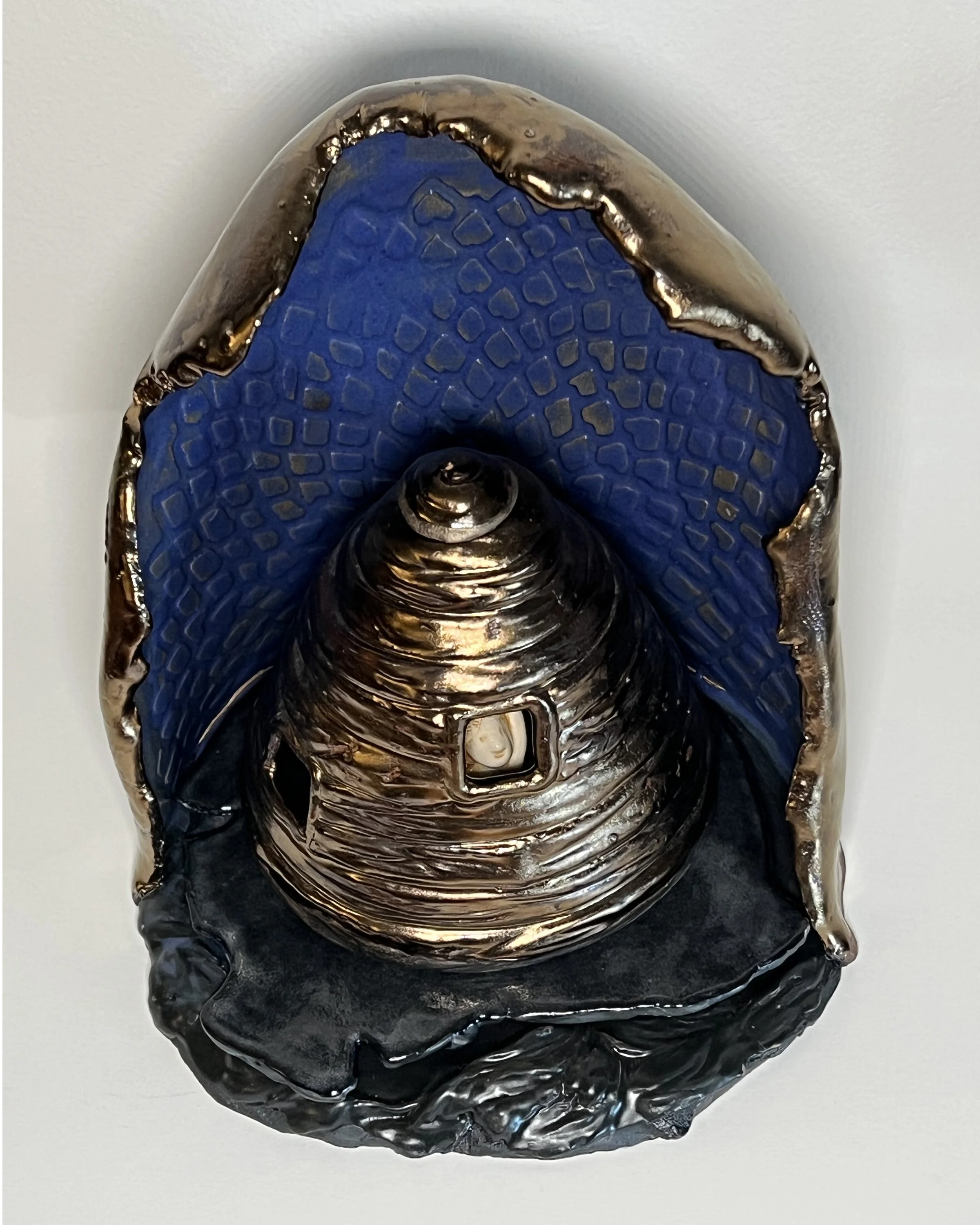
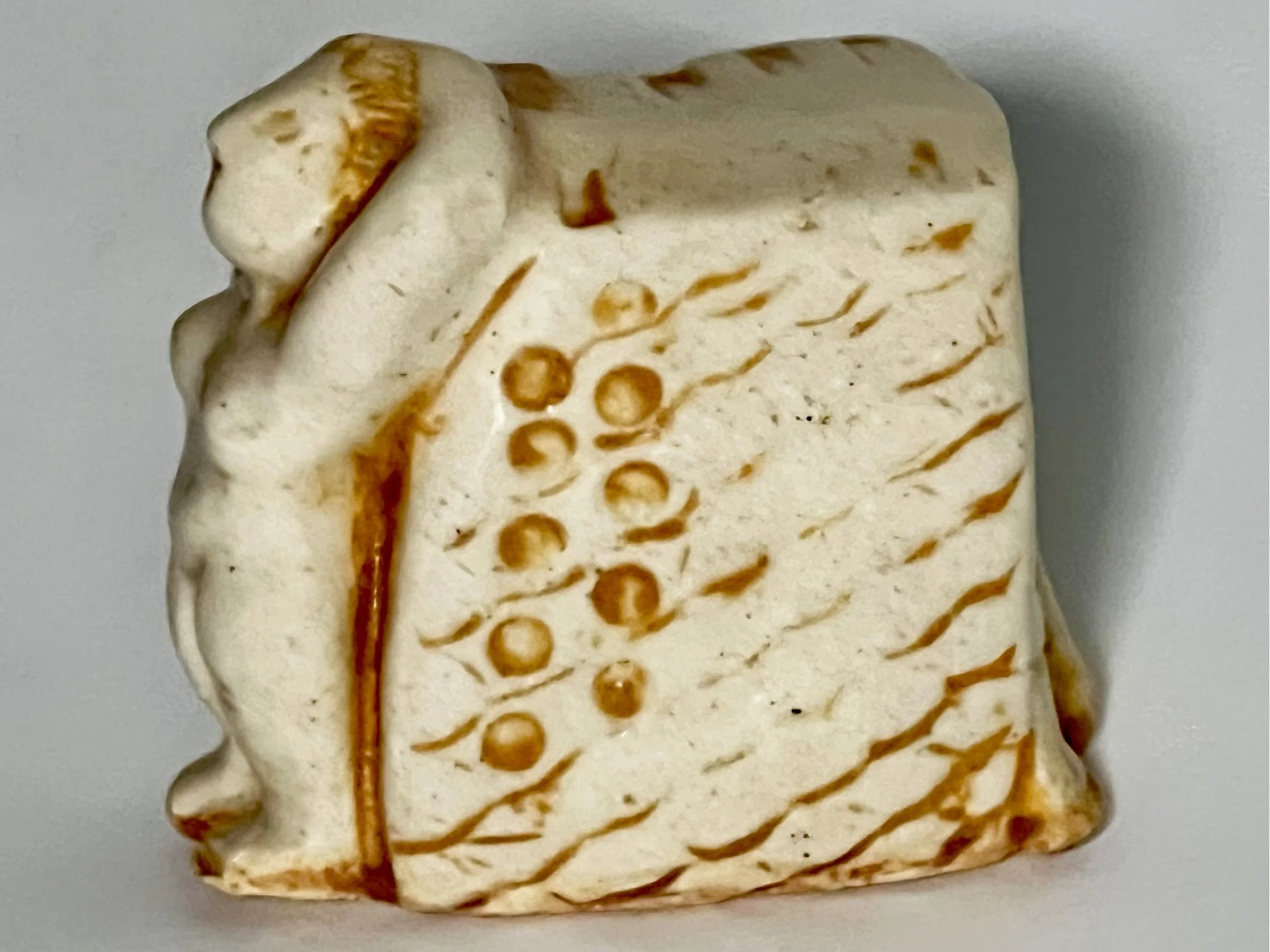
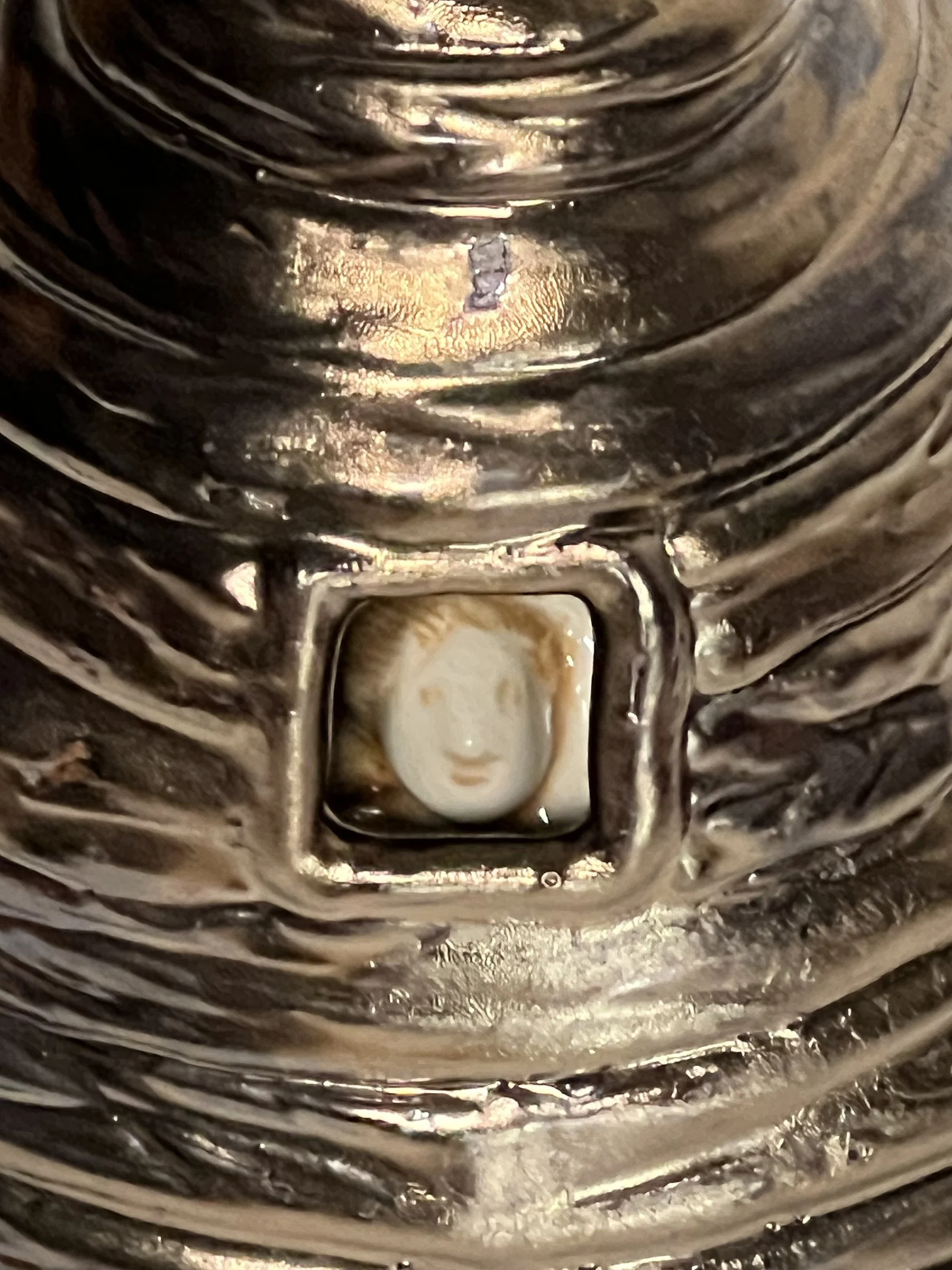
Hive Grotto detail showing area below the hive for water collection and texture representing grasses and straw on the earth. Two views of An Ancient Melissae, 2026 and detail within Hive Grotto, stoneware, rutile, glaze. 2.25 w x 2.25” h x 1” d.